Clayton Bailey
American, 1939–2020
About Clayton Bailey
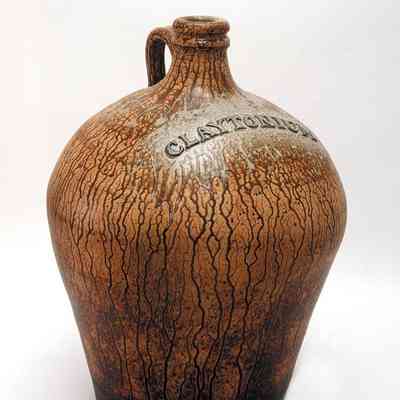
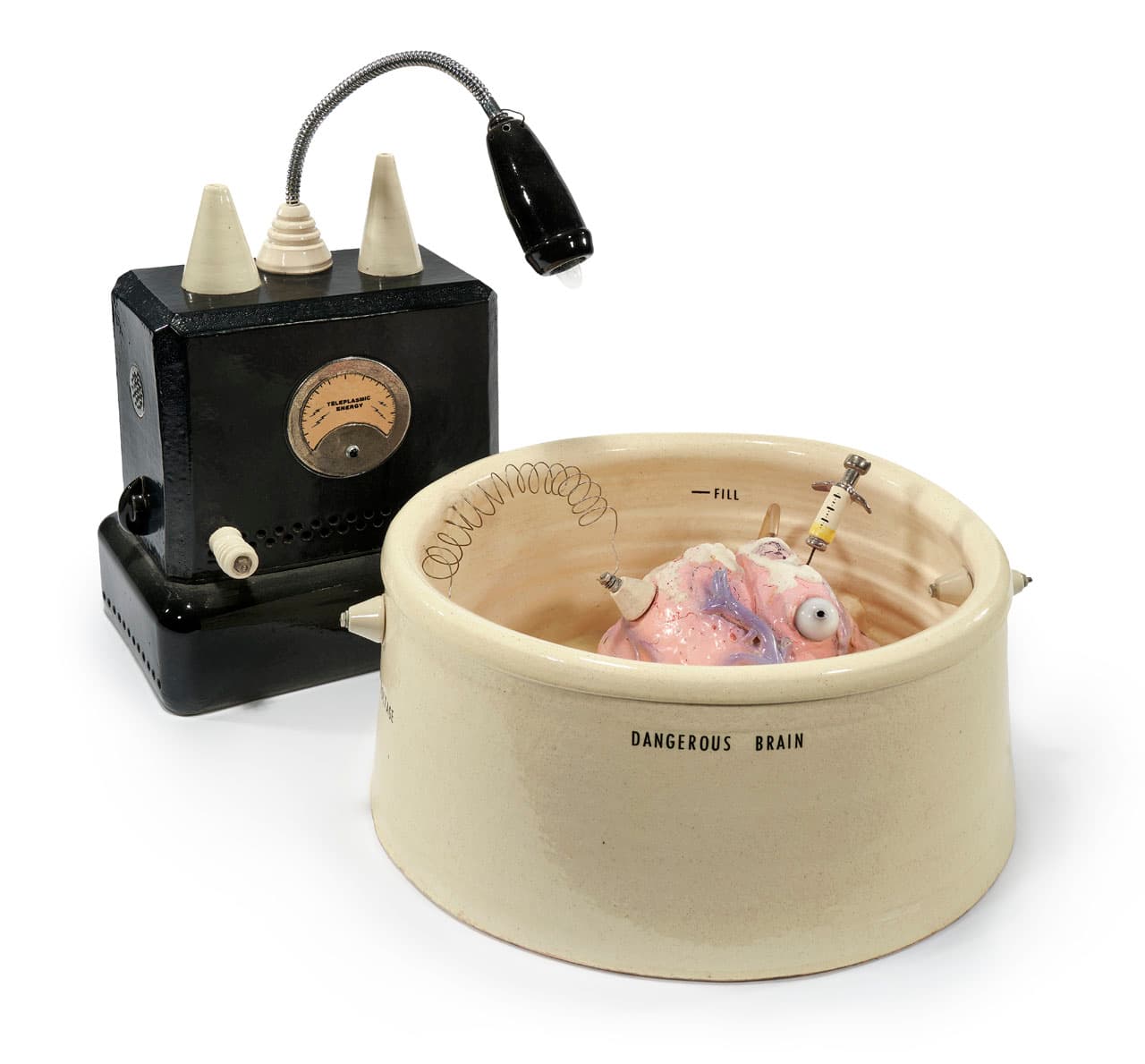
Clayton Bailey (1939–2020) was a major figure in Funk art, the American sculptural ceramics movement known for its playful sensibility. Bailey studied ceramics at University of Wisconsin, Madison, and after moving to California taught at California State University, Hayward (now East Bay) for twenty-six years.
Bailey always resisted tradition. While he trained with Toshiko Takaezu and became an accomplished ceramist, according to Takaezu, “He didn’t care what others were doing. He just wanted to express himself in his own unique, creative, bizarre and humorous way.” Thus, California in the late 1960s was the perfect place for his irreverent wit. Bailey and his family found in the Bay Area a coterie of like-minded artists. Unique among them, Bailey invented a world of wonders at his home and studio in Port Costa, on the Carquinez Strait, a forty-year labor of creativity and personal vision.
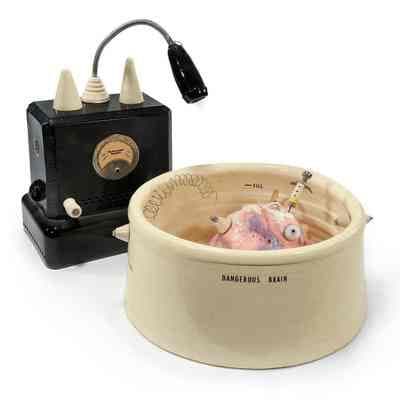
A self-proclaimed mad scientist complete with alter ego—Dr. George Gladstone—Bailey aimed to surprise and delight with his art and personality, even creating a Museum of Wonders that displayed Gladstone’s research of “Kaoilithic” fossils from the “Bone Age”, including evidence of the elusive Big Foot.
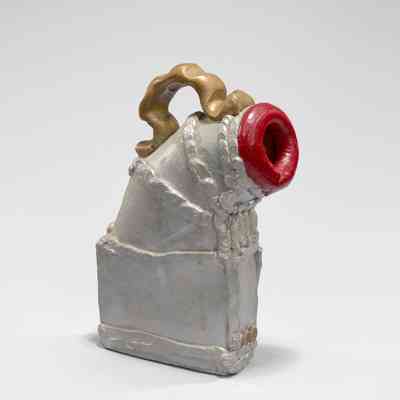
After the closing of the Museum of Wonders in 1978, Bailey continued to build his image of a folksy inventor and snake oil salesman with works that purportedly had the power to transmute crystals to gold or collect the newfound element Claytonium. Later works include his signature “exploding pots,” which were created with clay harvested near his home at the defunct Port Costa Brick Works. This clay contained carbon particles that off-gassed during firing, causing the clay to expand rather than shrink. The Crocker’s collection includes works that survey much of Bailey’s career.
Notes:
Daniels, Diana L. “What If…?” in Clayton Bailey’s World of Wonders. Crocker Art Museum, 2011.