Samurai
Armor from the Collection of Ann & Gabriel Barbier-Mueller
Armor from the Collection of Ann & Gabriel Barbier-Mueller
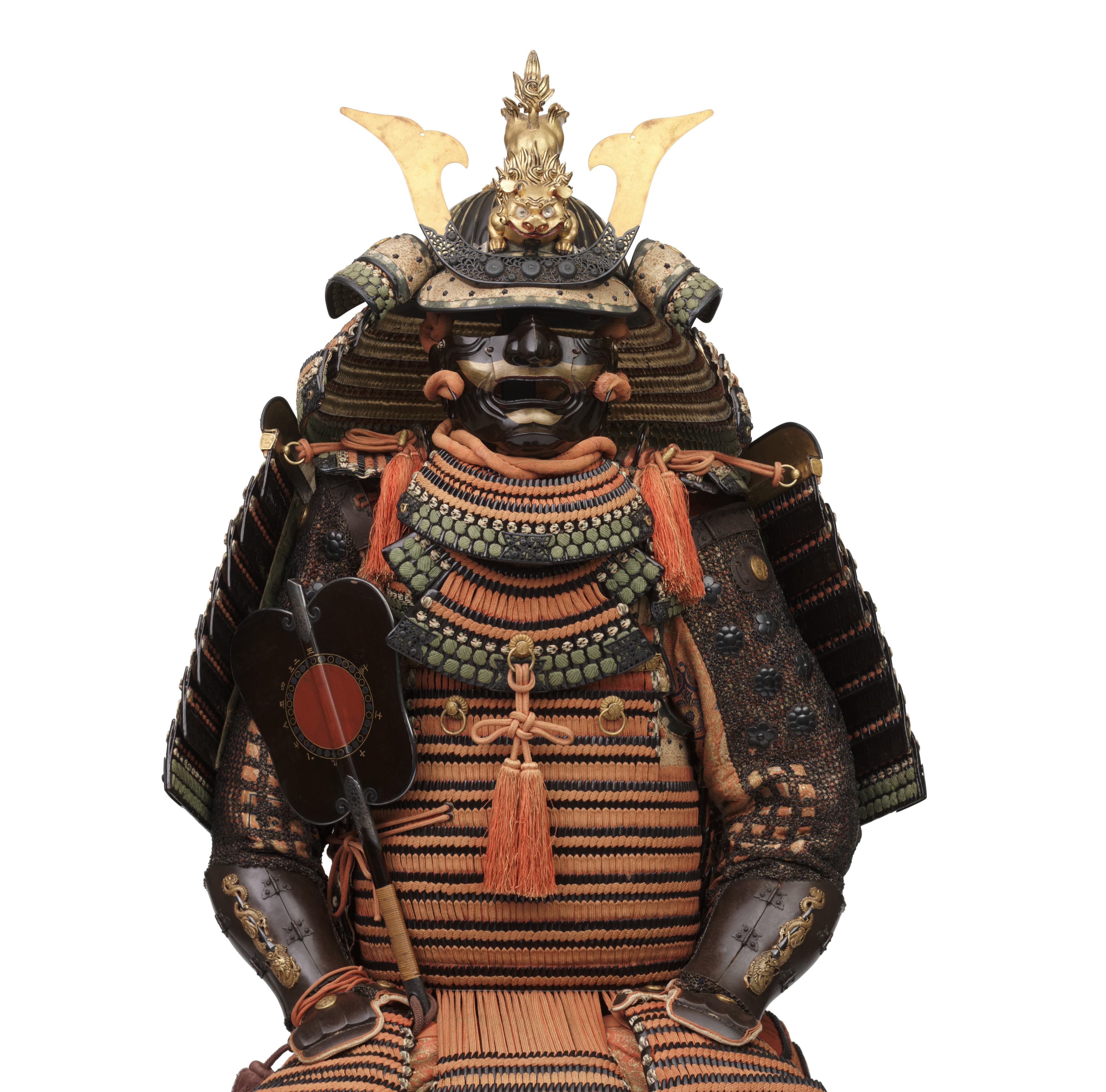
This exhibition of samurai armor showcases the culture, lifestyle, and art of the samurai warrior in Japanese society. It is drawn from the collection of Ann and Gabriel Barbier-Mueller, one of the world’s largest and most important collections of samurai armor, and offers visitors an intimate look at samurai artistry and tradition from the 12th to the 19th centuries. The exhibition features more than 140 objects from the Dallas-based collection, including 18 complete suits of armor, more than 50 helmets and masks, and weapons and equestrian equipment.
Nimaitachidō tōsei gusoku armor (detail), attributed: Myōchin Yoshimichi (helmet bowl); Myōchin Munenori (armor), Muromachi period, circa 1400 (helmet bowl); mid Edo period, 18th century (armor). Iron, shakudō, lacing, silver, wood, gold, brocade, fur, bronze, brass, leather. © The Ann & Gabriel Barbier-Mueller Museum, Dallas. Photo: Brad Flowers.
More Info
Samurai—meaning “those who serve”—were Japan’s elite warrior class, rising to power in the 12th century. Influenced by court culture, Buddhism, Confucianism, and the principles of bushido, they shaped Japan’s political and social life from the establishment of the first military government in 1185 until the restoration of imperial rule in 1868. Many works in the exhibition date to the Edo period (1615–1868 CE), a time of peace under the Tokugawa shogunate. As samurai transitioned from warriors to civic leaders, armor became a symbol of ceremony, prestige, and identity rather than solely a tool of war.