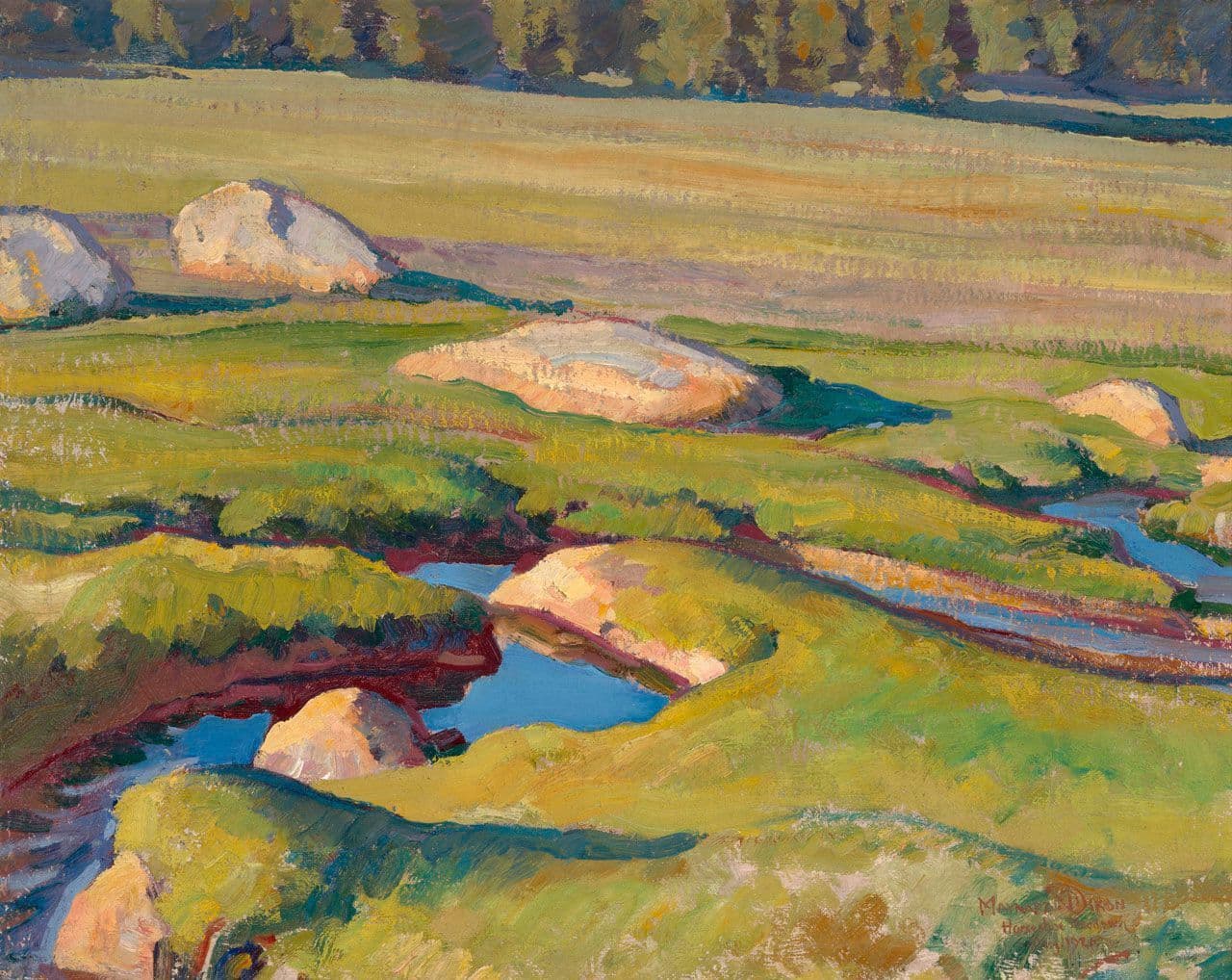
Glacial Meadow (Tuolumne Meadows), 1921.
Maynard Dixon (American, 1875–1946)
Oil on canvas, 16 in. x 20 in. Crocker Art Museum, gift of the Elkus family in memory of Ben Britton Elkus, 2004.11.8
Painting
20th Century
American Art, 1800 to 1945
Theme: California Geographies
california artists
landscapes
Artist Maynard Dixon called California home for much of his life, but he ultimately became known for depicting scenes throughout the American West. He grew up on his family’s ranch near Fresno and trained briefly at the Mark Hopkins Institute of Art in San Francisco. At the beginning of his career, he was an illustrator, producing western scenes for magazines and newspapers. In 1900, he visited Arizona and New Mexico, which inspired his lifelong passion for exploring and depicting the Southwestern landscape and the Native American people he encountered there. In the 1930s, he produced scenes of migrant workers and the Great Depression’s “forgotten man.”
Dixon abandoned commercial art in 1912 to concentrate on easel paintings and murals, but never relinquished his objective approach to his subject matter. He met photographer Dorothea Lange in 1920, and they married the following year. Her influence prompted Dixon to produce paintings that were more spare, stylized, and defined.
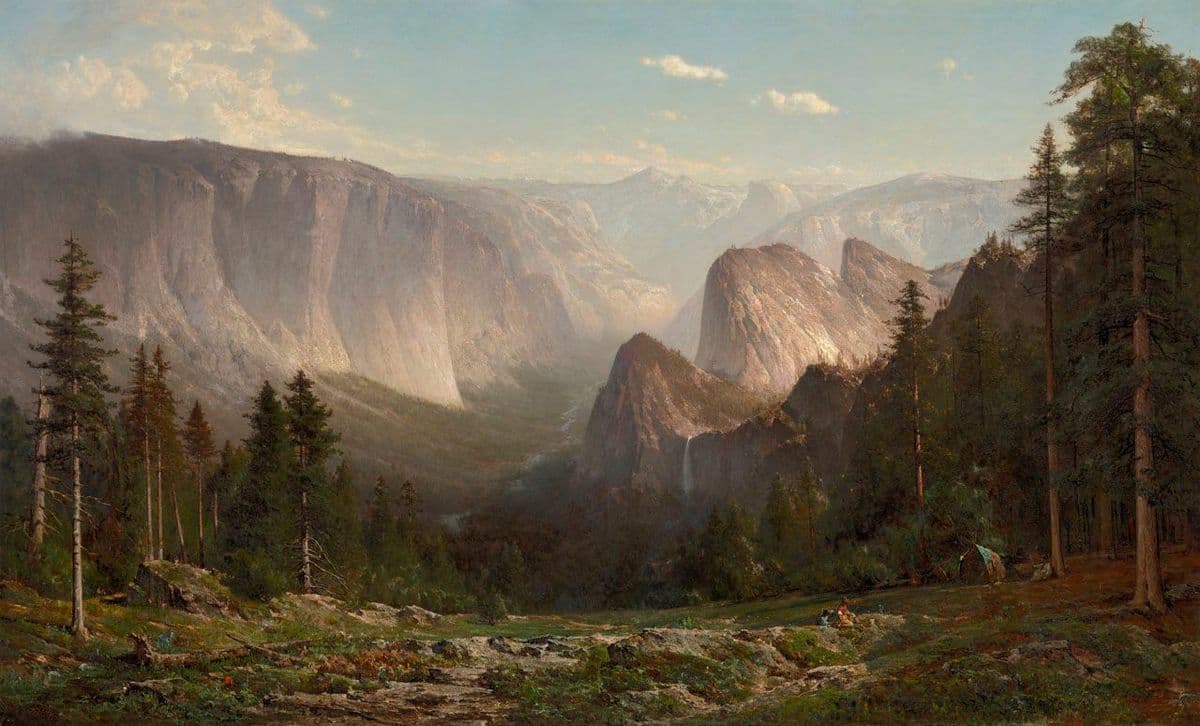
He painted Glacial Meadow (Tuolumme Meadows) in the summer of 1921, showing a scene in the Tuolumne Meadows area of Yosemite National Park. The meadows were a decided departure from the grandiose depictions of the Yosemite Valley that previous artists had portrayed, as was Dixon’s up-close and colorful treatment of the subject.
LOOK FOR: Rich purple shadows that show the lingering influence of Impressionism.
Details
- artist/cultureMaynard Dixon
- nationalityAmerican, 1875–1946
- titleGlacial Meadow (Tuolumne Meadows)
- date1921
- mediumOil on canvas
- dimensions16 in. x 20 in.
- credit lineCrocker Art Museum, gift of the Elkus family in memory of Ben Britton Elkus
- accession no.2004.11.8
- collectionAmerican Art, 1800 to 1945