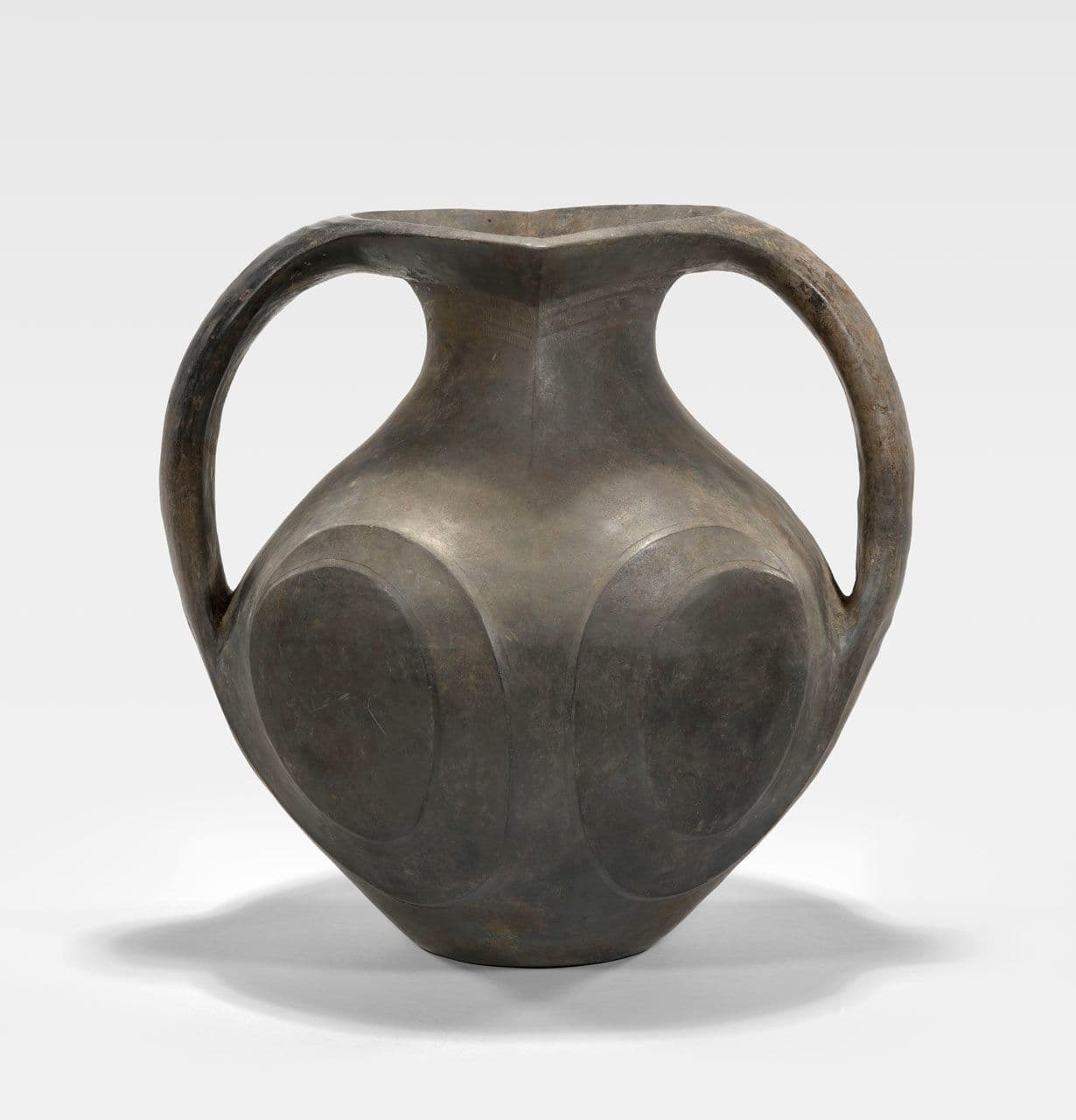
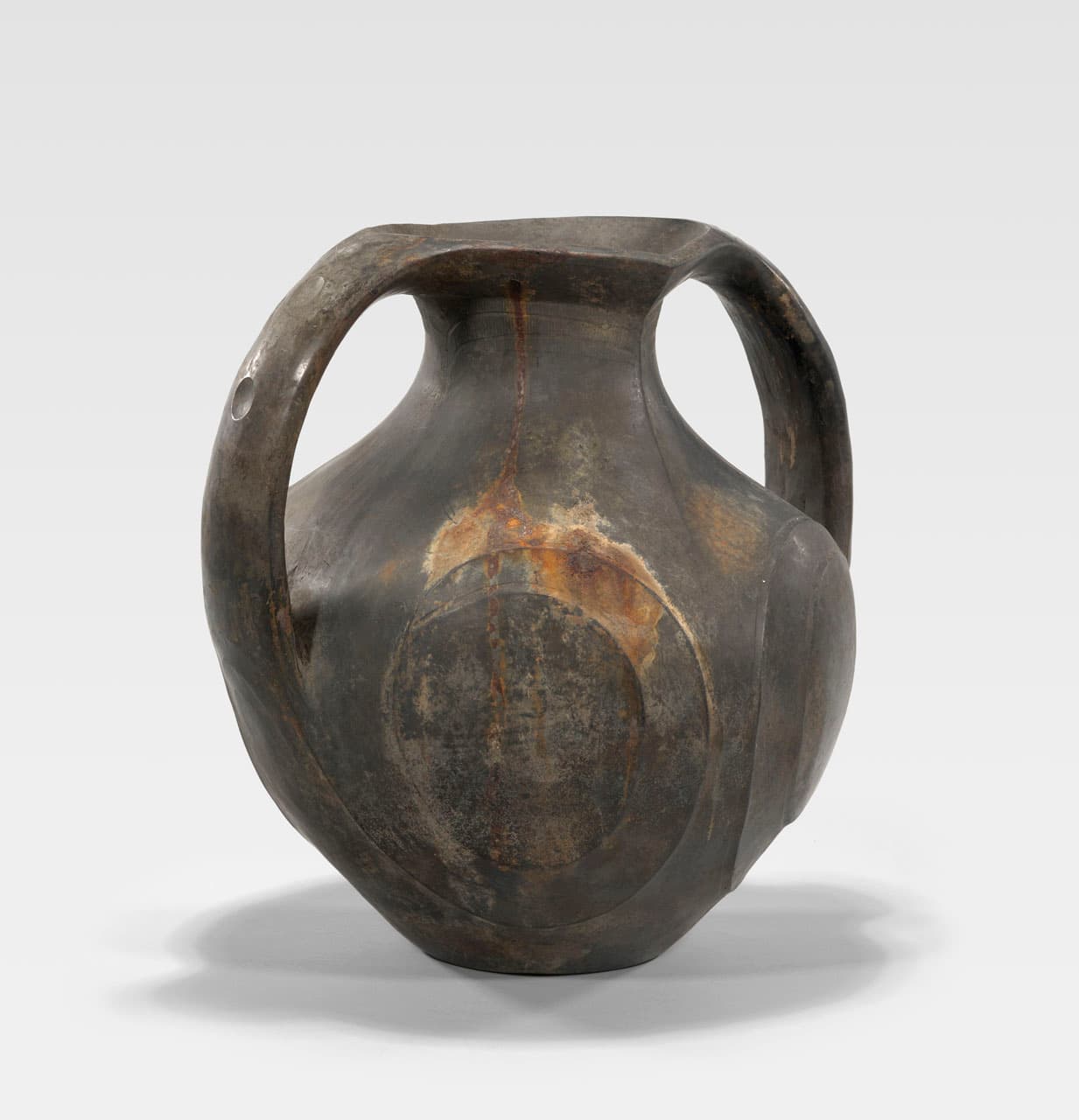
Amphora with Two Handles, 206 BCE–220 CE.
Chinese (206 BCE–220 CE)
Earthenware, 13 in. x 12-3/4 in. x 11 in. Crocker Art Museum, gift of Gary Smith, 2021.90.1
Han dynasty burial ceramics included everyday pots used by the deceased such as this unglazed black amphora. The lozenge-shaped mouth, twin flat handles, and symmetrical crescent whorls on the body are particular to this regional style of vessel, which were not made after the end of the Han dynasty.
This type of black earthenware jar is known as Lifan, named after the area in Sichuan province in southwest China where such wares have been discovered. Similarly-shaped vessels from the Neolithic cultures of Machang (circa 3000–2000 BCE) and Xindian (circa 1500 BCE) feature painted decorations on buff-colored grounds.
LOOK FOR: Shallow incised lines decorating the neck.
Details
- artist/cultureChinese (206 BCE–220 CE)
- titleAmphora with Two Handles
- date206 BCE - 220 CE
- historical periodHan dynasty (206 BCE–220 CE)
- mediumEarthenware
- dimensions13 in. x 12-3/4 in. x 11 in.
- credit lineCrocker Art Museum, gift of Gary Smith
- accession no.2021.90.1
- collectionAsian Art, Ceramics